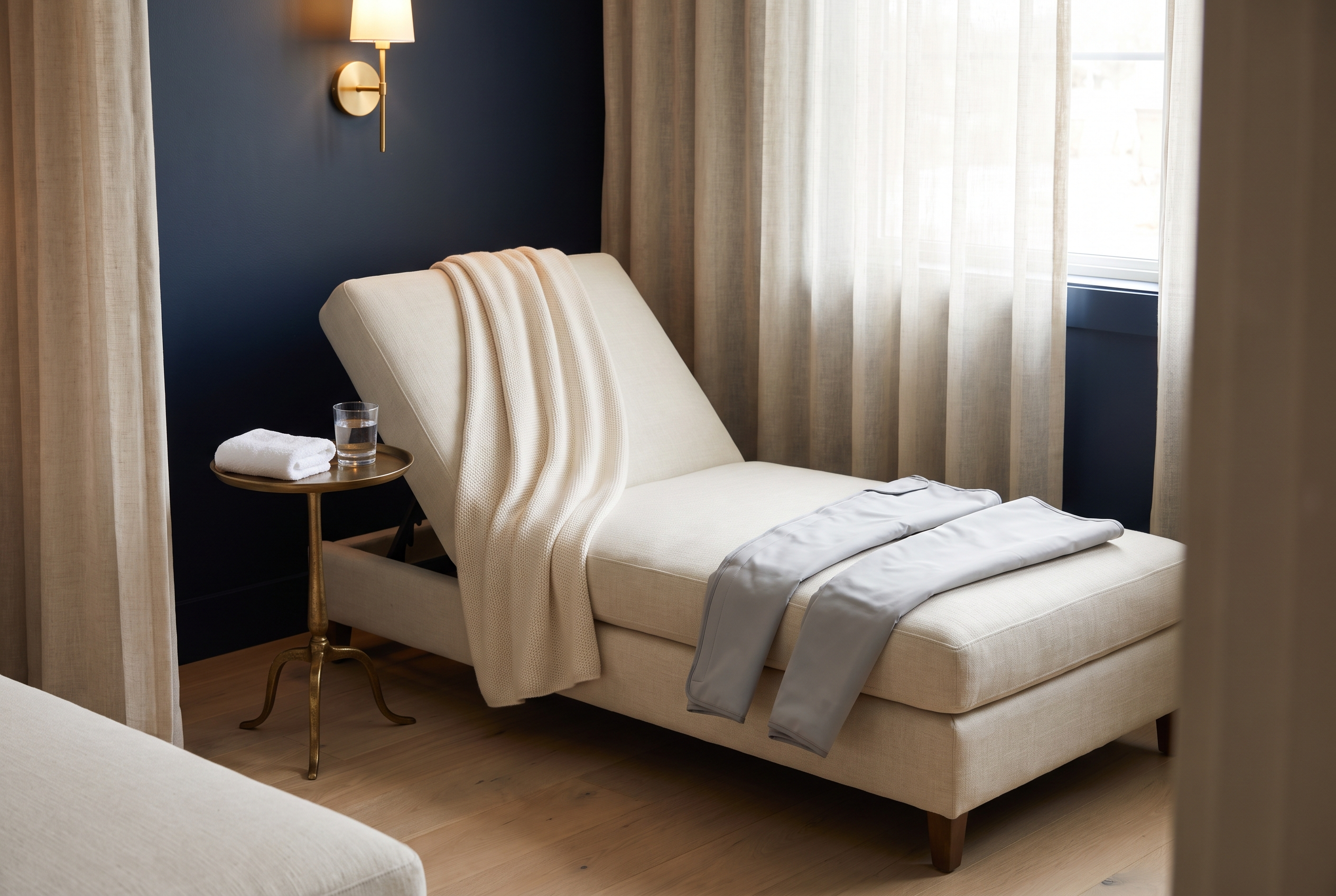
Lymphatic drainage has become one of those wellness terms that gets attached to everything from facial rollers to weekend juice cleanses. Somewhere in the noise, the actual therapy got lost.
The real version is a clinical technique with decades of use in hospitals and rehabilitation clinics, most often for people managing swelling after cancer surgery. The wellness version is gentler, faster, and increasingly popular with people who simply feel heavy, puffy, or stuck in recovery mode.
Both are legitimate. Neither one is a detox miracle. This guide explains the difference so you can decide whether it belongs in your own routine.
Your lymphatic system, in plain English
Think of your circulatory system as a two-way street. Your heart pumps blood out through arteries and pulls it back through veins. Along the way, fluid leaks out into your tissues to feed your cells. That fluid has to get home somehow.
That is the lymphatic system's job. It is a network of vessels and roughly 600 lymph nodes that collects this leaked fluid, now called lymph, filters it, and returns it to your bloodstream near the heart. On the way through, your lymph nodes screen for bacteria, damaged cells, and other waste, which is why the system is also a core part of your immune defense.
Here is the part most people do not know: the lymphatic system has no pump. Blood has the heart. Lymph has nothing but the squeeze of your muscles when you move, the rhythm of your breathing, and the gentle contraction of the vessel walls themselves.
If you sit at a desk for nine hours, travel often, recover from surgery, or spend most of your day in one position, lymph flow slows down. That is when the heaviness, the puffy ankles, and the sluggish recovery start showing up.
What lymphatic drainage actually does
Lymphatic drainage therapy uses very light, rhythmic pressure applied in the direction of lymph flow, moving fluid from congested tissue toward the nodes in your neck, armpits, and groin where it can be filtered and reabsorbed.
The pressure is deliberately light. Lymphatic vessels sit just beneath the skin, so deep tissue pressure actually collapses them rather than helping. If a session feels like a sports massage, it is not lymphatic drainage.
Where the evidence is strongest
Manual lymphatic drainage is best documented for lymphedema, the persistent swelling that develops when lymph nodes are removed or damaged, most commonly after breast cancer treatment. It is a standard component of complete decongestive therapy in that setting.
It is also used clinically for chronic venous insufficiency, lipedema, fibromyalgia, rheumatoid arthritis, and swelling after injury or surgery, including cosmetic procedures where post-operative fluid retention slows healing.
Where the claims get ahead of the science
Lymphatic drainage does not melt fat, and it will not "flush toxins" in the way the internet implies. Your liver and kidneys handle detoxification. What the therapy moves is fluid, and moving fluid does produce real, visible effects: less puffiness, lighter limbs, better range of motion, faster recovery from hard training.
Those results are worth having. They are just not the same thing as weight loss, and any clinic that tells you otherwise is selling rather than treating.
Manual drainage versus compression-based therapy
There are two main ways to deliver the same principle.
Manual lymphatic drainage is performed by hand by a trained therapist. It is precise, highly individualized, and the standard for diagnosed lymphedema. It also depends entirely on the practitioner's technique and availability.
Pneumatic compression therapy uses a garment with inflatable chambers that fill and release in sequence, mimicking the same directional wave of pressure. It is consistent every session, covers large areas of the body at once, and is what most wellness clinics now use for general recovery and fluid retention.
Neither replaces the other. If you have diagnosed lymphedema, manual therapy with a certified lymphedema therapist should lead your care. If you are dealing with everyday congestion, post-workout heaviness, travel swelling, or recovery after a procedure, compression-based therapy is efficient and repeatable.
Inside a Premium Lymphatic Drain session
At IV Hydration & Beyond, our Premium Lymphatic Drain uses Flowpresso, a Class II medical device that combines three therapies in a single 40 minute session.
Cyclic pneumatic compression
Chambers across the feet, legs, trunk, and arms inflate in sequence to encourage circulation and lymph movement in the right direction.
Infrared thermotherapy
Gentle warmth relaxes the tissue and supports circulation, so the compression works with a softer, more responsive body.
Deep pressure stimulation
Sustained, weighted pressure signals the nervous system to shift out of stress mode, which is why most clients leave calmer than they arrived.
You stay fully clothed in a bodysuit, choose your heat and pressure levels, and lie still for the cycle. Most people describe it as a slow, warm hug that works its way up the body. Nothing about it is painful.
Afterward, expect to use the restroom more than usual for the rest of the day. That is the fluid you just moved, doing exactly what it should.
Who is a good candidate
- People with fluid retention and heaviness in the legs, ankles, or arms, especially after long flights, long shifts, or long stretches at a desk.
- Athletes and anyone training hard, where faster recovery between sessions is the goal.
- Post-procedure patients cleared by their provider, where swelling is slowing down healing after surgical or aesthetic treatment.
- People living with chronic stress or poor sleep, who benefit as much from the nervous system reset as from the fluid movement.
- Anyone in a seasonal reset pairing recovery work with hydration, nutrition, and better sleep.
Who should avoid lymphatic drainage
This therapy is not appropriate for everyone. Speak with a medical provider first, and skip it entirely if any of the following apply:
- Blood clots or a history of deep vein thrombosis
- Active infection, cellulitis, or fever
- Congestive heart failure or significant heart disease
- Kidney failure
- Recent stroke
- Over areas of cancerous tissue or radiation-damaged skin
Pregnancy, uncontrolled high blood pressure, and recent surgery all warrant a conversation with your provider before booking. At our clinic, every client is screened before a first session.
How often should you go?
It depends on what you are solving for.
For a general reset, once or twice a month keeps things moving and pairs well with the rest of your wellness routine.
For active recovery, weekly sessions during heavy training blocks or a demanding work stretch tend to produce the most noticeable difference.
For post-procedure swelling, a short, more frequent course over the first few weeks is typical, always guided by the provider who performed the procedure.
One session feels good. A rhythm is what changes how you feel week to week.
How to get more out of every session
Lymphatic drainage moves fluid. What you do around the session determines how well your body clears it.
- Hydrate properly, before and after. Moving fluid through a dehydrated system is working against yourself. If oral hydration is not keeping up, an IV infusion delivers fluid and nutrients directly into the bloodstream.
- Move your body daily. Walking, stretching, and deep diaphragmatic breathing are the pump your lymphatic system does not have.
- Cut back on sodium the day before and after. Excess sodium holds water in your tissues and works directly against the therapy.
- Protect your sleep. Recovery is consolidated overnight, and poor sleep undoes a good part of what the session started.

Clients who see the biggest shift almost always pair drainage with hydration therapy rather than treating it as a standalone fix.
September Reopening Offer
We have moved to a larger space at Alliance Square, and we are marking it with credit back on your visit. This offer runs through September 30, 2026 only.
Valid on visits through September 30, 2026. Offers cannot be combined. Credit applies to a future visit. Ask our team for full details when you book.
Reading this after September? The offer above has ended, but our Premium Lymphatic Drain and hydration therapies run year round. Ask our team what is currently available.
Frequently asked questions
Does lymphatic drainage help you lose weight?
No. It moves fluid, not fat. You may weigh slightly less immediately after a session and look less puffy, but that is water leaving your tissues, not fat loss. Sustainable weight change comes from nutrition, movement, and in some cases a supervised medical weight loss program.
How will I feel afterward?
Most people feel lighter and noticeably relaxed, and some feel mildly tired for a few hours as the nervous system settles. Increased urination for the rest of the day is normal and expected. Drink more water than usual.
How long does a session take?
Our Premium Lymphatic Drain runs 40 minutes of uninterrupted cycles, with heat and compression levels adjusted to your comfort across four body zones.
Is compression therapy the same as manual lymphatic drainage?
They use the same principle with different delivery. Manual drainage is performed by hand and is the standard of care for diagnosed lymphedema. Compression therapy uses a sequenced inflatable garment and is well suited to general recovery, fluid retention, and post-procedure swelling once your provider has cleared you.
Can I combine it with IV therapy on the same visit?
Yes, and many clients do. Hydration supports fluid clearance, so pairing an infusion with a drainage session is one of the most common combinations we schedule. Our team can sequence both in a single appointment.
Ready to feel lighter?
Book a Premium Lymphatic Drain at our new Paso Robles location, or talk with our team about pairing it with hydration therapy for a full reset.
Book an Appointment
IV Hydration & Beyond
Alliance Square, 935 Riverside Ave., Unit 13, Paso Robles, CA 93446
(805) 769-4001
This article is for general education and is not medical advice. Lymphatic drainage is not appropriate for every person or condition. Speak with a qualified medical provider about your own health before beginning any new therapy. IV Hydration & Beyond is led by Hanna Roewer, MSN, APRN, FNP-BC.